
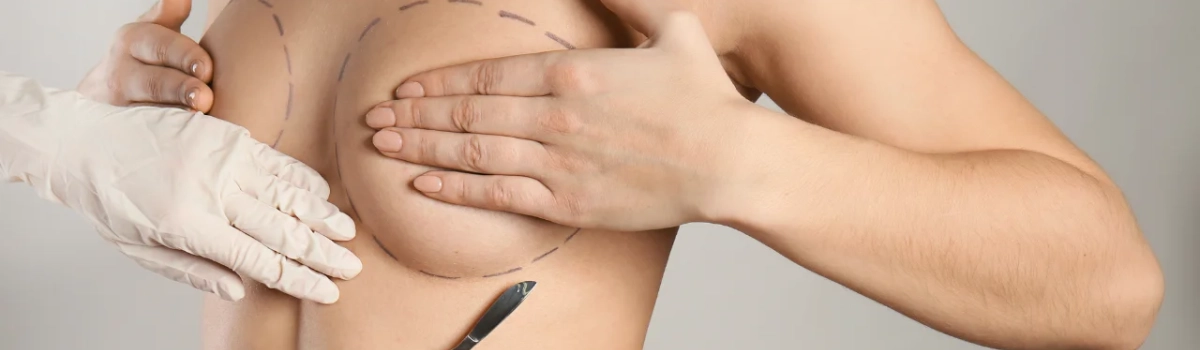
How to prepare for breast augmentation
Most of the regret we hear about starts with a decision made in the wrong place: a volume picked from a photograph, or a size agreed before anyone measured the chest it has to sit on. Preparing well is mostly a matter of knowing which choices are yours and which belong at the assessment.
Yours to decide:
- Whether you want surgery at all, and what you want it to change
- Your timing and what you are prepared to spend. We do not publish prices, so a figure comes back with your enquiry
- Which hospital, and which surgeon
- Whether to go ahead once you have heard the risks
Settled with your surgeon at the assessment:
- Whether you are a candidate now
- Implant type and profile
- Volume in cc, taken from your measurements and the thickness of your own tissue
- The incision: at the edge of the areola, in the underarm, or in the breast crease
- Placement: under the breast tissue, under the chest muscle, or the dual plane between the two
Bring photographs of results you like. Your surgeon reads them as a description of the look you want, not as a size order: the same implant on a different chest gives a different result. What each of those choices involves is worth reading first.
Asymmetry, sagging and differences in nipple position are common and they change the surgical plan. We check for them at the assessment, so you do not need to grade your own breasts before you arrive.
Are you a candidate for breast augmentation yet?
What we ask for | What it is doing there |
18 or older | Our stated minimum age |
Not pregnant or nursing | Breast size and shape change through pregnancy and feeding, so a result built before that changes with it |
Good physical health | Confirmed by a medical evaluation, a blood test and a chest X-ray, not by how you feel |
Realistic expectations | Discussed at the assessment. A surgeon who tells you what the surgery will not do is doing the job properly |
Psychologically stable | We have psychiatrists on staff, and this is a check that the timing is right rather than a hurdle to clear |
At least a year on HRT | Before breast surgery as part of transition, because breast development continues on hormones and the operation is planned around what has already grown |
If you do not qualify today, it is usually timing, and what you get back is a date.

What risks should you hear before you agree?
Our list for this operation: bleeding, bruising, soreness, poor healing, infection, keloid scarring, asymmetry, decreased or lost sensation, capsular contracture, visible skin waves or sagging, implant failure, and the risks that come with general anaesthesia.
Two things are missing from most preparation articles. Have both before you sign a consent form.
Implants are not lifetime devices. We say so plainly on our revision service, where rupture, leakage, capsular contracture, rippling, symmastia and BIA-ALCL are the reasons patients come back for a second operation. The FDA’s guidance on breast implants puts it as an instruction: assume you will need further surgery at some point.
A silicone gel rupture can be silent. The FDA notes that people with silicone gel implants may be advised to have periodic MRI or ultrasound to look for a rupture that produces no symptoms. Saline behaves differently, as the table above shows.
BIA-ALCL is a rare cancer of the tissue capsule the body forms around an implant. It is not breast cancer, and outcomes are generally good when it is found and treated early. We name it here because the consent conversation is a poor moment to meet the term for the first time.
None of this is an argument against having surgery. This is what you are agreeing to.
Which appointments should be in your diary before you book a flight?
Before surgery: a medical evaluation, a blood test and a chest X-ray. That is how good physical health gets confirmed, and an anaesthetic risk usually shows up there if you have one.
After surgery: follow-up appointments at 7 days, 14 days and one month, with your stitches out at the first one. Daily breast massage for an hour, for at least a month, and for at least three months if you are having breast surgery as part of transition. Your surgeon sets your figure and shows you the technique before you leave.
The operation itself takes one to two hours under general anaesthesia. What happens from the recovery room onward is set out week by week after the operation.
If you are flying in, the minimum stay in Thailand for breast surgery is 10 to 14 days, which covers the 7-day and 14-day appointments. Book the return flight for after the second one, because that is the appointment that confirms you are fit to fly. How long to stay for each procedure is listed by operation.
Ask any hospital for three things in writing before you pay a deposit: the name and registration of the surgeon who will operate, an itemised quote covering what a revision would cost and who pays, and the number to call at two in the morning. Ask us for the number of nights in the hospital too, because it changes what accommodation you need.
After surgery, what needs a doctor the same day?
Soreness, tightness, swelling and bruising are expected. These are not.
- Shortness of breath or chest pain
- Fever
- One breast swelling, hardening or bruising quickly, especially in the first days
- Redness spreading outward from an incision
- A wound opening, or discharge from it
- Pain, swelling or tightness in the calf
For any of these, call us on +662 559 0155. Do not wait for your next appointment, and do not send a message and wait for a reply. If you are already home, be seen locally the same day and tell us afterwards.

Questions people ask before breast augmentation

How long does the operation take, and what anaesthesia is used?
One to two hours, under general anaesthesia.
When can I go back to work?
We publish no figure for augmentation on its own. Desk-based work within a few days is what we describe for breast lift and revision surgery, and we ask you to avoid strenuous activity for two weeks and to lift nothing over two to three kilograms for two months. If your job involves lifting, plan around the two months.
Will I need another operation later?
Probably, eventually. Implants are not lifetime devices, and rupture, capsular contracture, rippling and a change of size are all reasons patients come back.
Do I stop hormone therapy before surgery?
Ask, and get the answer in writing. We require at least a year on HRT before breast surgery as part of transition, but we publish nothing about pausing it around the operation, so your surgical team will give you specific instructions. Follow that one exactly.


