
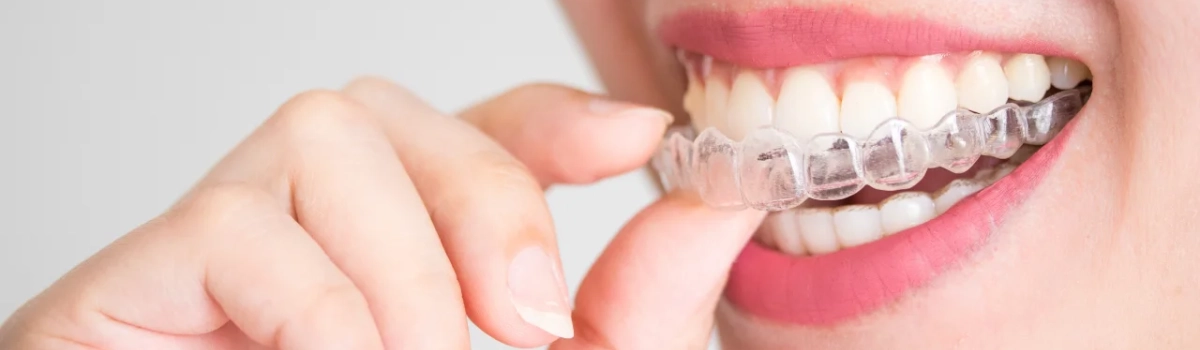
Many people planning a nose job are already in braces, or are about to start. The question that follows is whether one treatment has to wait for the other.
The answer depends far less on your nose than on what your orthodontic plan involves. If braces are only straightening teeth, the two treatments barely interact. If jaw surgery is part of the plan, the order matters a great deal, because moving the upper jaw changes the shape of the nose that sits on top of it.
One thing to be clear about first: Kamol Hospital performs rhinoplasty and corrective jaw surgery, but we do not provide orthodontic treatment. Braces are arranged and managed by your own orthodontist. This article explains how the pieces fit together so you can plan the sequence with both teams.
Not sure which row is you? Send a side-profile photograph and your orthodontist’s treatment plan to our patient coordinators, and say whether jaw surgery has been mentioned. We will tell you where rhinoplasty fits in your sequence.
The short answer
- Braces on their own do not change the shape of your nose.
- If your plan is braces only, rhinoplasty can come before or after them.
- If your plan includes jaw surgery, rhinoplasty comes last, after the jaws are in their final position.
- Upper jaw surgery does alter the nose, which is why a nose operated on beforehand may need revising afterwards.
- We work out your sequence at an assessment, with your orthodontist’s treatment plan in front of us, not from a photograph.
Do braces change the shape of your nose?
No. Braces move teeth through bone. They do not move the nasal bones or the cartilage that gives your nose its shape, and they do not make the nose larger, smaller or higher. What braces do change is the frame around the nose. Correcting the bite alters how the lips sit, the fullness between the nose and the mouth, and the balance of the lower face. When that changes, your nose can look different in the mirror even though nothing about it has changed. People often read that as the nose growing or becoming more prominent. It is the frame that moved. This matters for planning rather than for safety. If your lower face is still going to change, we would be assessing your nose against proportions that will not be there a year from now. What your braces will and will not achieve is a question for your orthodontist, and it is worth asking before you book anything for your nose.Does jaw surgery change the shape of your nose?
Yes, and this is the reason the order matters. Corrective jaw surgery, also called orthognathic surgery, repositions the upper jaw, the lower jaw, or both. When the upper jaw is moved, the base of the nose moves with it. The nostrils can widen, the tip can rotate upwards, and the bridge can look different in profile, all without anyone operating on the nose itself. We plan for that movement. It is an expected effect of repositioning the maxilla, not a complication. It is also why we ask about jaw surgery before planning anything on the nose. A nose refined before the jaw moves is sitting on a platform that is about to shift, and it may need revising afterwards to restore the result you originally wanted. At Kamol, corrective jaw surgery is carried out under general anaesthesia, usually through incisions inside the mouth, with the repositioned jaw secured using miniplates and screws, wires and rubber bands. The jaw heals over about six weeks, and complete healing takes up to twelve weeks. Most patients return to work or study within one to three weeks.The order we work in
Corrective jaw surgery is never a standalone operation, which is why braces and surgery arrive as a package. At Kamol, the procedure requires an orthodontist and a maxillofacial surgeon working together, and the pre-surgical orthodontic phase usually takes 12 to 18 months before surgery. A further period in braces afterwards is normal while the bite settles. For patients whose plan includes jaw surgery, that produces a realistic order of:- Pre-surgical orthodontics. Your orthodontist aligns the teeth, typically over 12 to 18 months.
- Corrective jaw surgery. The jaws are moved into their final position.
- Post-surgical orthodontics. The bite is refined while healing completes.
- Rhinoplasty. The nose is assessed and operated on against finished facial proportions.
How long should you wait between jaw surgery and rhinoplasty?
There is no single number that applies to everyone, because the interval is set by the jaw rather than by the nose. What we want to see before planning a nose is a jaw that has healed and is stable in its final position, and an orthodontist who has finished refining the bite. At Kamol, jaw healing takes about six weeks, and complete healing takes up to twelve weeks. Healing and finishing are not the same thing, though, and it is usually the remaining orthodontic work rather than the bone that decides how much longer you wait. Your own interval is confirmed at your assessment, once we have examined you and read your orthodontist’s plan.Which order applies to you?
| Your situation | Sensible order | Why |
| Braces only, no jaw surgery planned | Either order works | Braces do not disturb the nose and the nose does not disturb the teeth. Choose on convenience |
| Braces only, but the lower face will change noticeably | Braces first, nose after | The nose is assessed against finished facial proportions rather than current ones |
| Jaw surgery in the plan | Braces, then jaw surgery, then rhinoplasty | Upper jaw movement changes the nasal base. Operating on the nose first risks needing it revised |
| Rhinoplasty already done, braces not yet started | The nose is settled, so time the braces with your surgeon | Routine orthodontic appointments do not touch the nose, but your post-operative follow-up schedule comes first |
| Both wanted close together | We assess case by case | Two teams, two recovery patterns and two sets of appointments have to be reconciled |
Sequencing the nose within facial feminisation surgery
For patients planning facial feminisation surgery or facial masculinisation surgery, this question arrives in a more complicated form, because rhinoplasty is rarely the only facial procedure on the list, and the jaw may be on it too. The principle does not change. We plan the nose against its final foundation, so if your plan includes jaw repositioning, the nose follows it. Where jaw surgery is not involved, we can stage rhinoplasty alongside other facial procedures, and which operations we combine in a single session depends on the extent of the surgery, your general health and the total anaesthetic time. If you are in orthodontic treatment while planning FFS, tell us at the consultation. It changes the order of your plan, and it is easier to build the sequence correctly at the start than to revise a nose afterwards.Rhinoplasty recovery, and what it means for your timing
A splint is usually worn for one week. Swelling and bruising remain visible for two to three weeks, and we advise at least a two-week break from work, no strenuous activity for at least two weeks, and no glasses or sunglasses resting on the nose for at least four weeks. You will have a good idea of your result at around four months, but the shape continues to settle and the final outcome may take up to a year. That last figure is the one that affects sequencing. Any decision that depends on how your nose finally looks waits for the twelve-month mark. Routine orthodontic adjustments do not, because nothing in a braces appointment goes near the nose. Anaesthesia, operating time and hospital stay vary considerably between the rhinoplasty techniques we perform. Alarplasty takes about thirty minutes under local anaesthesia and you go home the same day, while bridge reduction is done under general anaesthesia over two to three hours and you stay overnight.Risks you should understand before planning either procedure
Rhinoplasty carries risks including infection, facial asymmetry, adverse reaction to anaesthesia, suture rupture, visible scarring, fluid accumulation under the skin, clotted blood accumulation, injury to the facial nerves, and dissatisfaction with the appearance after surgery. Corrective jaw surgery carries its own: blood loss, infection, nerve injury, jaw fracture, relapse of the jaw towards its original position, problems with bite fit, jaw joint pain, the possible need for a second surgery, and root canal therapy becoming necessary. We go through both lists with you at your assessment, alongside the sequence itself.When to contact us after surgery
Contact us rather than wait if you have:- A fever, or pain that is increasing rather than settling
- Redness, heat or discharge around an incision
- Bleeding that does not stop with your head raised
- Swelling that worsens after the first week rather than improving
- Sudden loss of feeling, or new asymmetry appearing after the early swelling has gone
- Difficulty breathing through the nose that is getting worse
Plan your sequence with both teams
If you are weighing braces, jaw surgery and rhinoplasty, the order is worth settling before anything begins. Send front and side photographs together with your orthodontist’s treatment plan, and our coordinators will arrange an assessment with one of our facial surgeons.Common questions
Can you get a nose job while wearing braces?
Braces themselves are not a reason to postpone. What the consultation needs to establish is whether jaw surgery is part of your orthodontic plan, because that changes the answer completely.
Can braces make your nose look bigger?
They can change how big it looks. Correcting the bite alters the lips and the lower face, and the nose can read as more prominent against the new proportions. The nose itself is unchanged.
Can rhinoplasty and jaw surgery be done in one operation?
We assess combined procedures individually. How far the jaw is being moved, your general health and the total anaesthetic time all come into it, and we decide after examining you.
How soon after rhinoplasty can braces be fitted?
Ask the surgeon who operated on you. Nothing in an orthodontic appointment touches the nose, but your follow-up schedule takes priority in the first weeks, and your surgeon knows the details of your repair.
Does the sequence affect the cost?
Rhinoplasty is priced by technique, and a hump reduction, a tip correction and a bridge reduction with grafts are three different operations. You receive a written quote after your assessment. Orthodontic treatment is billed separately by your own orthodontist.


