Vaginal Rejuvenation with ThermiVa (Radiofrequency)
After childbirth, with age, and as estrogen levels fall around menopause, vaginal tissue can become looser, drier and less elastic. This can cause dryness, irritation, discomfort during sex, mild leakage of urine and reduced sexual satisfaction.
ThermiVa is a non-surgical treatment that uses monopolar radiofrequency (RF) energy to gently heat the tissue inside and around the vagina. The temperature is carefully controlled, so the treatment feels warm and relaxing. Heating stimulates collagen production, which may help tighten and improve the tissue.
Energy-based vaginal treatments are still being studied, and the US FDA has cautioned that their safety and effectiveness for “vaginal rejuvenation” haven’t been fully established. Your doctor will explain the expected benefits and limitations for your situation.
Who May Benefit
- Vaginal looseness, for example after vaginal childbirth
- Vaginal dryness or reduced natural lubrication
- Mild stress urinary incontinence (leaking urine when coughing, sneezing or exercising)
- Reduced sensation or difficulty reaching orgasm
- Women who want a non-surgical option without downtime
Radiofrequency treatment addresses mild to moderate symptoms. It is not a substitute for surgery where there is significant prolapse or substantial laxity — those need vaginal tightening or vaginal reconstruction, and we will say so at assessment rather than sell a course of treatments unlikely to help.
Before Treatment
- Not during your period
- No vaginal infection or inflammation
- A normal pelvic examination and cervical screening within the past 2 years
- At least 3–6 months after vaginal delivery, or 1 month after a cesarean section, or as advised by your doctor
- Not pregnant
Treatment is given as a course of three sessions of about 30 minutes each, spaced roughly a month apart. No anaesthesia is needed and there is no downtime — most women return to work or ordinary activity the same day. Discomfort is minimal; the sensation is usually described as warmth rather than pain.

Procedures for Laser Vaginal Rejuvenation (Thermiva®)
The approach is called progressive desensitization, and the idea is to get comfortable with insertion. Practical treatment approaches combine pelvic floor control exercises, insertion or dilation training, pain elimination techniques, transition steps, and exercises designed to help women identify, express, and resolve any contributing emotional components.
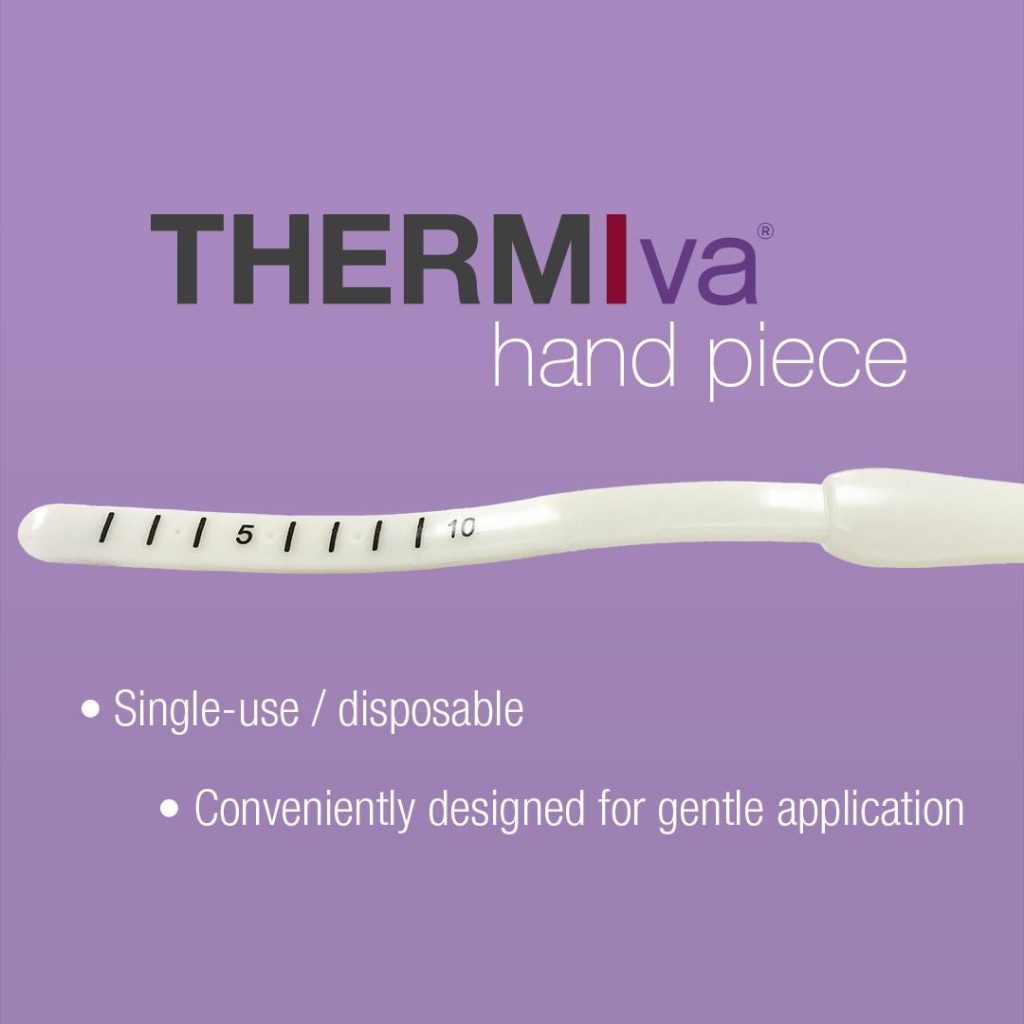
Thermiva ® treatments use radiofrequency energy to gently heat tissue so women can reclaim, restore, and revive feminine wellness without discomfort or downtime. The patented ThermiVa electrode is designed to treat the internal and external anatomical features of the vagina.
Thermiva ® treatments are performed thrice, each 30 minutes, one month apart. Because the Thermiva ® treatments take a short time, patients can return to work or do normal activities on the same day. It is very comfortable and completely painless. The patients can engage in intercourse with their partner on the same day.
What to Expect from the Results
Women who respond well typically notice:
- Improvement in vaginal laxity and tone
- Relief from dryness and discomfort during intercourse
- Improvement in mild stress urinary incontinence
- Better sexual comfort and sensation
Results build across the course of three sessions rather than appearing after the first, and they are not permanent — the effect typically lasts around 9 to 12 months, after which maintenance treatment is usually needed. Response varies between individuals, and radiofrequency treatment works better for mild to moderate symptoms than for advanced laxity.
Recovery
- Return to work and daily activities the same day.
- You may notice increased discharge for 3–5 days.
- Avoid sexual intercourse for 6 hours after treatment.
Risks and Complications
Complications are rare, but reported cases include:
- Burns to the vaginal tissue
- Scarring
- Pain during intercourse
- Persistent or recurring pain
Radiofrequency and laser devices for vaginal treatment have attracted regulatory attention internationally, including safety communications from the US FDA regarding marketing claims and reported adverse events. Any clinic offering these treatments should discuss that context with you honestly rather than presenting the treatment as risk-free.
For more significant laxity, see Vaginoplasty / Vaginal Tightening. For menopause-related dryness, see Hormone Replacement Therapy.
Why Choose Kamol Hospital for Vaginal Rejuvenation?
This is an area where marketing runs well ahead of evidence. Devices are sold to clinics with impressive claims, and patients are frequently sold courses of treatment without anyone establishing whether their symptoms will respond — or whether something else is causing them.
Our starting point is a proper gynaecological assessment. Vaginal dryness, laxity, and urinary leakage have several possible causes, and they need distinguishing: genitourinary syndrome of menopause responds to oestrogen and to radiofrequency; significant prolapse needs surgical repair; stress incontinence beyond the mild range needs urogynaecological assessment rather than a device. Recommending the right treatment requires knowing which of these you have.
Being a full hospital means we can offer the whole range rather than the one thing we own a machine for. Where hormonal treatment is the better answer, we prescribe it. Where surgery is genuinely indicated — vaginal tightening, labiaplasty, or reconstruction — our surgeons perform it regularly. Where radiofrequency suits, we provide it as part of a plan rather than as a package.
We are also honest about durability. This treatment is not permanent, and a patient who is told otherwise will be disappointed in a year. Knowing upfront that maintenance sessions are likely allows a realistic decision about whether it is worth it.
Consultations are private, and our staff are used to discussing intimate symptoms without awkwardness — which for many women is the barrier to seeking help at all. Kamol Hospital is accredited by the Joint Commission International, and our international patient team arranges scheduling, accommodation, and interpretation.
Frequently Asked Questions (FAQs)
Is this treatment painful?
No anaesthesia is needed and most women describe the sensation as warmth rather than pain. Some find it mildly uncomfortable, particularly on the external tissue. It is a comfortable treatment, though describing it as entirely painless would be overstating it.
How long do the results last?
Typically around 9 to 12 months, after which a maintenance session is usually recommended. This is a treatment that manages symptoms rather than resolving them permanently, and understanding that before you start matters. Ongoing oestrogen deficiency continues regardless of treatment, which is why the effect fades.
Will it fix urinary leakage?
It can help mild stress incontinence — leakage on coughing, laughing, or exercise. It is not a treatment for moderate or severe incontinence, urge incontinence, or leakage caused by prolapse, all of which need urogynaecological assessment and often surgical treatment. Being assessed properly first avoids spending money on a treatment that cannot address your particular problem.
Is this the same as vaginal tightening surgery?
No. Radiofrequency treatment stimulates the existing tissue and produces modest, temporary improvement without surgery or downtime. Surgical vaginal tightening physically reduces the vaginal canal and produces a much greater and lasting change, with anaesthesia and a recovery period. Which suits you depends on the degree of laxity and how much change you want.
When can I have ThermiVa after giving birth?
Usually at least 3–6 months after vaginal delivery, or 1 month after a cesarean section, once your body has recovered. Your doctor will confirm the right timing.
Can I have sex after treatment?
Yes, after 6 hours. You may notice some increased discharge for a few days.
Does Thailand have good doctors for women's intimate health?
Thailand has a well-developed private healthcare sector with gynaecologists and plastic surgeons trained to international standards, and intimate wellness services are widely available in Bangkok. The distinction worth drawing is between accredited hospitals with credentialed gynaecologists and aesthetic clinics that have bought a device — both offer these treatments here, as they do everywhere. Ask who is performing the assessment and what their specialty training is.
Is it worth travelling to Bangkok, Thailand for vaginal rejuvenation?
For radiofrequency treatment alone, the three-session course spread over two months makes a dedicated trip impractical for most international patients — this suits women already living in or regularly visiting Thailand better. Where travelling clearly makes sense is for surgical treatment, or where you are coming to Bangkok, Thailand for another procedure and want a gynaecological assessment while you are here. A full women’s health check can be completed in a day or two and costs a fraction of the equivalent in Australia, the UK, or North America.